


Calathea
Calathea is a common plant used for indoor office decoration purposes. It is also widely used in homes and businesses. It is a type of plant that prefers indirect lighting, which means that it is perfect for indoor and office buildings. Calathea plants are common for indoor purposes because they are generally easy to care for and look fantastic, offering bright green plants to liven up indoor spaces.
Calathea plants are part of the family of plants known as Marantaceae, a species of flowering plants from tropical regions such as Africa. They're famous for their big green, colorful leaves. These broad leaves make them common in low-light areas. Low light plants have large leaves to absorb and use as much light as they can. They are found in nature in the jungles and at the base of the trees.
Type of Calathea
Calathea Warscewiczii
Calathea Lansifolia
Calathea Rufibarba
Calathea Medallion
Calathea Sanderian
Calathea Crocata
Though in every form and design, the oblong braid patterned leaves are
what earns their nickname: the Rattlesnake vine, or the "Heart" of Jesus, the common variety of Calatheas.
Place your Calathea where it gets bright ambient light and watch the sun shake its leaves! Avoid direct sunshine, however since
the fragile leaves would be bruised.
PRO TIP: Calathea is highly expressive in foliage and becomes evident by curling its leaves into small rolls if they have thirst. Don't worry – let you know it needs a drink. Do not worry. Calathea is bouncing out of underwatering really easily.
There are some simple tips to ensure the best possible and stable growth of all calathea varieties.
No water can be spotted with chlorinated water or leaves. Using rain water, water filtered or distilled, or let your tap water sit overnight until you use it for moisture.
Calatheas need a moist climate, especially in winter. To maintain humidity at the optimal level, use one of these approaches. Hold your calathea where it does not fall below 60°F to 65°F. Tropical plants need a warm climate.
Most varieties of Calathea are sensitive to fertilizer salts which burn the tips of the leaves. Don't overfertilize the soil to prevent any salt accumulation annually.
In the growing season, all forms of Calathea need regularly humid soil and low dryness tolerance. This does not, however, mean it will grow soggy or red.

Calathea Warscewiczii
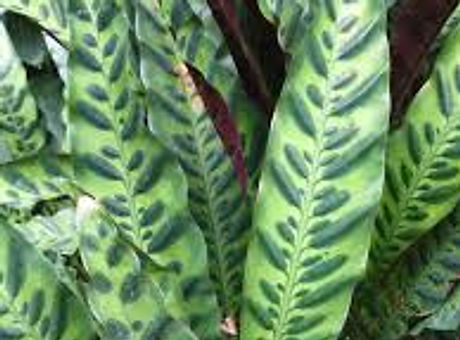
Calathea Lansifolia

Calathea Rufibarba

Calathea Medallion

Calathea Sanderian

Calathea Zebra

Did you know?
A little prayer for you
Did you know, this plant also called as "Prayer Plan"? Marantaceae are named for the trend of falling or 'praying' in the night of plants in this family. Nyctinasty is the name of the regular motions of the plants leaves. In this family, numerous plants upgrade their leaves at night and reduce them at a circadian rhythm by day. They adjust the water pressure in their pulvini and transfer their leaves alongside the stalk, swollen nodes at the bottom of the leaves (petiole). They are thought to imitate the movement of the sun in the sky in order to optimize the absorption of energy. Click the button below to watch a timelapse how the plant are "Praying".